REVIEW · POSITANO
Guided tour of the history and tradition of the Sorrento lemon
Book on Viator →Operated by Vivaio Ruoppo - Lemon Tour Sorrento · Bookable on Viator
One hour can turn lemons into a story you can taste. This guided stroll through the Sorrento lemon tradition blends a historic setting with hands-on flavor, ending on a terrace with lemon-based drinks and treats. I especially like the walk through different old varieties and how the guide explains the cultivation methods behind that famous Sorrento tang. The only real drawback is you’ll want decent weather, because the experience depends on being outdoors with those sea views.
If you’re staying near Positano/Sorrento, this is also a smart afternoon choice: it’s short (about 1 hour 15 minutes), capped at 20 people, and easy to follow from the meeting point at Viale dei Pini, 31 in Sant’Agnello.
In This Review
- Key highlights before you go
- Walking into Sorrento’s lemon world (Sant’Agnello, not Positano proper)
- The Pizzo garden: a 19th-century estate vibe under the trees
- The lemon grove stroll: old varieties you can actually spot
- A guide who talks like a local (Pia’s style makes a difference)
- The harvest moment: what you can expect during the walk
- Terrace tasting with sea views: bread, marmalade, lemonade, limoncello
- Old Grandma’s limoncello recipe: a souvenir you’ll actually use
- Price and value: where that $59.29 really goes
- Practical details that matter on the day
- Who this tour suits best (and who might skip it)
- Should you book Vivaio Ruoppo’s Lemon Tour in Sant’Agnello?
- FAQ
- How long is the Sorrento lemon guided tour?
- What does the tasting include at the end of the tour?
- Do I receive anything to take home?
- Where does the tour start?
- Is there a limit on group size?
- Is the ticket mobile?
- What happens if the weather is poor?
Key highlights before you go

- Pizzo garden setting: a historic 19th-century estate atmosphere while you walk the grove
- Multiple centuries-old lemon varieties: including Ovale di Sorrento, Sfusato di Amalfi, and Cedar
- Practical cultivation talk: you learn the traditional technique behind the fruit
- Sea-view tasting terrace: lemonade plus homemade limoncello, with bread and orange/lemon marmalade
- Chef-level takeaway: you get Old Grandma’s limoncello recipe at the end
- Small-group feel: maximum 20 travelers, with lots of space to ask questions
Walking into Sorrento’s lemon world (Sant’Agnello, not Positano proper)
This tour is based in Sant’Agnello, right in the heart of that Sorrento Peninsula lemon-growing belt. I like this location choice. You get the citrus country feel without spending an entire day on the road. And because you’ll be outdoors for the tasting part, you get a “land-and-sea” perspective that fits the way Sorrento lemons are usually discussed: sun, breezes, and that coastal environment.
The meeting point is at Viale dei Pini, 31, 80065 Sant’Agnello (NA), Italy and the tour ends back there. That back-to-start detail sounds small, but it matters when you’re planning dinner after. You won’t feel like you’re stranded across town.
Other Sorrento tours we've reviewed



The Pizzo garden: a 19th-century estate vibe under the trees

Your route begins with a guided look at the Pizzo garden, described as a historic estate dating back to the 19th century. Even if you’re not a big “estate-history” person, the point here is sensory: you’re walking into a place that has been farmed and cultivated for a long time, not just planted for show.
This is where the atmosphere clicks. You’re not just visiting lemon trees. You’re in a working landscape that’s been organized for growing citrus, and that helps you understand why the lemon is treated like something more than a garnish.
The lemon grove stroll: old varieties you can actually spot
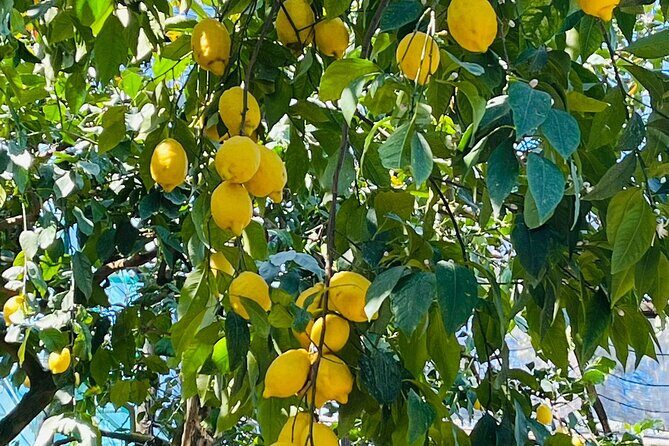
The tour then moves through the exclusive lemon grove, where you’ll walk among different lemon types. The varieties mentioned are Ovale di Sorrento, Sfusato di Amalfi, and Cedar. That variety list is a big deal. Many “lemon tours” oversimplify into one generic citrus. Here, you’re seeing that there are different forms with different characters, and that helps you taste and think differently once you get to the drinks.
You’ll also hear the guide explain the traditional cultivation technique used for Sorrento’s typical lemon. Even without getting technical, you’ll start to notice what the tour is trying to do: connect the final flavor to the process. That’s the difference between just drinking something lemony and understanding why it tastes the way it does.
A guide who talks like a local (Pia’s style makes a difference)
A standout from the experience is the guide’s energy and clarity. One guide name that comes up is Pia, repeatedly described as genuine, enthusiastic, and full of specific details—especially about where Sorrento’s lemons came from and how they developed their identity over time.
Why that matters for you: if you’re the type who likes learning while you walk, you’ll get more value than a casual stroll. You also get a better tasting experience, because you know what to look for as you compare one lemon “type” to another.
The harvest moment: what you can expect during the walk
One of the best perks is that you may even get to harvest a lemon during the tour. Not every tour promises that, and it changes the feel instantly. Picking a fruit forces you to slow down, look closely, and think about ripeness rather than just “tour mode.”
If you’re planning this with kids or teenagers, this hands-on element can be a big win. It’s not just photos; it’s doing one small real task in an orchard setting.






Terrace tasting with sea views: bread, marmalade, lemonade, limoncello

The tour ends on a terrace overlooking the sea with a tasting that’s built around the grove’s production. Here’s what’s included:
- Fresh lemonade
- Homemade limoncello
- Bread and marmalade made with oranges and lemons from their production
That menu is smart. It gives you a progression: sweet citrus flavor in the marmalade, brightness in the lemonade, and then the more intense, spirit-style finish of limoncello. If you’ve never tasted limoncello made from local lemons, this is the moment where the “why” becomes obvious. The lemon flavor is not just present—it’s the point.
Also, the sea-view terrace isn’t just for ambience. It makes the tasting feel like an event, not a quick sip-and-go. You’ll likely remember it as the most relaxing part of your walk.
Old Grandma’s limoncello recipe: a souvenir you’ll actually use
After the tasting, you receive Old Grandma’s limoncello recipe. I love this kind of take-home item. It turns the experience into something you can repeat later, which is rare for short tours.
Even if you don’t plan to make limoncello right away, the recipe is a useful reminder of what you learned and what you tasted. It also helps you justify the purchase (if you later decide to buy more bottles), because you’ll understand the flavor intent behind the drink.
Price and value: where that $59.29 really goes

The price is $59.29 per person for a tour lasting about 1 hour 15 minutes, and it includes guided walking time plus the full tasting (bread, marmalade, lemonade, and homemade limoncello) plus the recipe takeaway.
Here’s how I’d think about value: you’re paying for three things that add up quickly—
- Expert-guided orchard time (not just self-walking access)
- Multiple tasting items, including limoncello made from the grove’s own production
- A sea-view setting that elevates the tasting into an experience, not a snack break
If you compare this to doing a “lemon stop” on your own, you’d likely spend similar money just on transport and drinks—without the variety explanation or the structured walk through old trees.
Practical details that matter on the day
This tour uses a mobile ticket, and it’s confirmed at booking time. It also allows service animals, and it’s listed as near public transportation, which helps if you’re not driving.
Group size is capped at 20 travelers, which usually means you don’t get buried in a crowd while asking questions. It also supports the vibe you want for a tasting: you can hear the guide and enjoy your drink without shouting.
One last practical note: the experience is weather-dependent. Since the schedule includes outdoor walking and a terrace tasting, plan for the possibility that you might need an alternate date if weather turns.
Who this tour suits best (and who might skip it)
This is a strong fit if you want:
- A short afternoon activity with a clear story arc
- A guided walk focused on a real local product (not generic tourism)
- Citrus tastings that go beyond lemonade, including homemade limoncello
- Sea views without committing to a long trip or a full-day excursion
You might consider skipping if you’re only looking for a quick photo stop or you’re not interested in food/drink tastings at all. Also, if weather is unreliable during your travel dates, keep flexibility—this tour depends on being outdoors.
Should you book Vivaio Ruoppo’s Lemon Tour in Sant’Agnello?
Yes, I’d book it if you want an authentic, locally anchored experience with a tight timeline. The biggest selling points are the variety-focused orchard walk and the end-of-tour terrace tasting that actually includes the lemon’s full range—marmalade, lemonade, and homemade limoncello. Add in a guide like Pia (with her detail-driven explanations) and you get more than a drink ticket. You get context.
If you’re in the Positano/Sorrento area and want something different from beaches and viewpoints, this lemon grove tour gives you a taste of the region’s identity—literally—before you head back for dinner.
FAQ
How long is the Sorrento lemon guided tour?
The tour lasts about 1 hour 15 minutes.
What does the tasting include at the end of the tour?
You’ll have bread and marmalade made with orange and lemon, fresh lemonade, and homemade limoncello.
Do I receive anything to take home?
Yes. You’ll be given Old Grandma’s limoncello recipe at the end of the tour.
Where does the tour start?
The meeting point is Viale dei Pini, 31, 80065 Sant’Agnello NA, Italy.
Is there a limit on group size?
Yes. The tour has a maximum of 20 travelers.
Is the ticket mobile?
Yes. The tour uses a mobile ticket.
What happens if the weather is poor?
The experience requires good weather. If it’s canceled due to poor weather, you’ll be offered a different date or a full refund.