REVIEW · POSITANO
Transfer from Naples to Positano with 2 hours Private Tour in Herculaneum
Book on Viator →Operated by Askos Tours · Bookable on Viator
A buried Roman city in the middle of your trip. This private transfer from Naples to Positano builds in a guided walk through Herculaneum, with stops timed so you actually see the big interiors, baths, and houses without turning it into a full-day slog. I especially like that you get a true door-to-door setup, plus a professional guide who explains what you’re looking at instead of leaving you to guess. The main thing to consider is the pacing: the Herculaneum visit is about 2 hours, so if you want long, slow wandering, you may feel slightly rushed.
What makes this plan work is how it protects your time on the Amalfi Coast. You ride in an air-conditioned vehicle with a professional driver, and the tour guide handles Herculaneum while the driver stays with the car and your bags. I also like the practical touch that pickup is at the Naples time and location you choose, which can be a lifesaver when your day depends on hotel timing and ferry schedules.
Still, private transfer tours usually cost more than public transport, and this one is priced at $456.70 per person. If you’re traveling solo and flexible, the value depends on whether you’ll use the included Herculaneum entry and guide time instead of doing them separately.
In This Review
- Key highlights worth planning around
- Door-to-door Naples to Positano without the transit headache
- Pickup you control, then a relaxed handoff to the guide
- Herculaneum in about 2 hours: what you actually get to see
- Stop 1: Parco Acheologico di Ercolano (ticket office + start)
- Stop 2: Casa dei Cervi (House of the Stags)
- Stop 3: La Terrazza di M. Nonio Balbo (a benefactor’s terrace)
- Stop 4: College of the Augustales
- Stop 5: Casa del Rilievo di Telefo (house with a private connection)
- Stop 6: Partem Domus lignea (the preserved wooden partition)
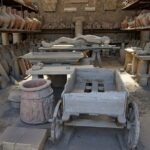
- Stop 7: House of the Skeleton
- Stop 8: Central Thermae (men’s and women’s baths)
- Stop 9: Casa del Salone Nero (the Black Hall)
- Stop 10: Casa Sannitica (Samnite-style layout)
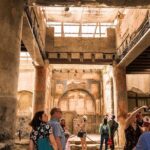
- Stop 11: Casa del Bel Cortile (courtyard with a balcony)
- Stop 12: House of the Grand Portal (center-area domus)
- After the ruins: landing in Positano with the day still yours
- Price and value: what $456.70 per person covers
- Who this private transfer fits best (and who might be happier elsewhere)
- Should you book this Naples to Positano plus Herculaneum tour?
- FAQ
- FAQ
- How long is the whole experience?
- Do I get picked up in Naples, and where do we go after?
- Is the Herculaneum guided tour included, and how long is it?
- Are entrance fees for Herculaneum included?
- Is transport private and air-conditioned?
- What’s not included in the price?
- Can I request car seats, and what about cancellation?
Key highlights worth planning around
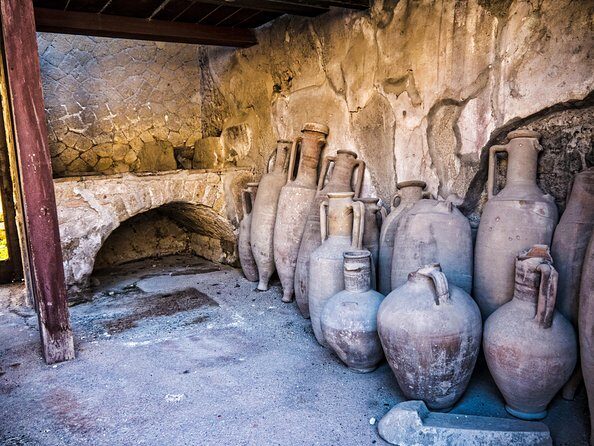
- Door-to-door pickup and hotel drop-off in Naples and Positano so you lose less time to logistics
- A guided Herculaneum route designed for a 2-hour visit, not a half-day free-for-all
- Air-conditioned private minivan with luggage transport while you’re inside the ruins
- Architecture details you can interpret on the spot, like the Casa dei Cervi and the Black Hall’s carbonised doorposts
- Multiple house stops plus baths, so you see how people lived and bathed, not just monuments
- Mobile ticket and free cancellation up to 24 hours before departure
Door-to-door Naples to Positano without the transit headache

The biggest win here is simple: instead of piecing together train or bus routes and then paying for taxis at the wrong moment, you start with a private ride. You’re booking a one-way transfer that includes entry into Herculaneum and a guided route through the ruins, then finishing with drop-off in Positano. That means your day has one main plan and fewer moving parts.
You also get the kind of convenience that matters on the Amalfi Coast: the vehicle is air-conditioned, your driver is a professional, and your bags don’t become an extra chore. The guide takes over during your time at the archaeological site, while your driver stays with the car—so you’re not constantly thinking about where to store things or whether you’ll miss the next step.
The other plus is pacing. The tour time is about 4 hours total, with a dedicated 2-hour guided stop at Herculaneum. It’s long enough to feel like you covered a real site, but short enough that you still have energy left for Positano.
Other Herculaneum tours from Positano
Pickup you control, then a relaxed handoff to the guide
This isn’t a vague group transfer where you show up and hope for the best. You choose the time and location for pickup in Naples, and you get hotel drop-off at the destination side. On a practical level, that reduces the stress of trying to coordinate with your hotel desk, late breakfasts, or a train delay earlier in the day.
One more detail I appreciate: the tour is private for your group only. That doesn’t just mean comfort; it usually means fewer waits and less time spent matching your schedule to a bigger crowd. And because the driver remains with the vehicle during your guided portion, you’re not stuck dragging bags around the ticket office loop.
For families, groups, and anyone who wants the day to run smoothly, that “one handoff” model is the value. You go from vehicle to guide, then back to vehicle, then to Positano. That’s the whole rhythm.
Herculaneum in about 2 hours: what you actually get to see
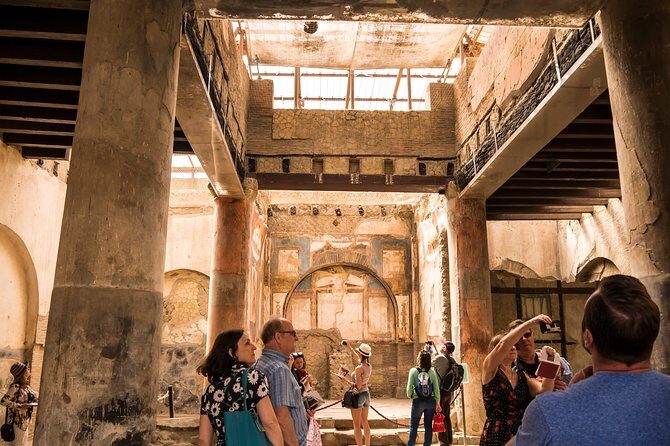
Herculaneum can be overlooked when people are shopping for Roman sites, because Pompeii gets the attention. The smart move here is using your Amalfi Coast route to pair Positano travel with a less famous buried Roman town and a focused guided visit. You’re not trying to see every corner; you’re hitting the key structures that help you understand the town’s layout and daily life.
The guide meets you at the ticket office of the Parco Acheologico di Ercolano. The first stop includes about 10 minutes for getting oriented and starting with admissions, then the route continues through a sequence of houses and baths, with each stop around 15 minutes. That consistent timing is what keeps the day from ballooning.
In at least one highlighted guide experience, Laura is named as a standout, praised for knowing Roman history and connecting details to what you’re seeing. Even if your guide is someone else, you should expect commentary that helps you read the remains as more than just wall fragments.
Below is the structure of the guided route and what each stop is useful for.
Stop 1: Parco Acheologico di Ercolano (ticket office + start)
You’ll meet the guide at the ticket office and step into the site with admission handled as part of the plan. The timing here matters because it gets you moving into the grounds without burning time figuring out where to go first.
Stop 2: Casa dei Cervi (House of the Stags)
This house earns its name from marble statues of deer or stags found in the peristyle. What I like about this stop is the storytelling angle: the guide can point to how art and decoration carried status, and how archaeological finds become the names we use today.
One consideration: because it’s about 15 minutes, you’ll want to watch for the explanation of what you’re looking at rather than trying to absorb every detail like you would on an unscheduled stroll.
Other Naples day trips from Positano






Stop 3: La Terrazza di M. Nonio Balbo (a benefactor’s terrace)
This terrace ties to M. Nonius Balbus, a major benefactor linked to restorations and public works. There’s also a long inscription described as part of what makes this stop memorable.
This is a good place to pay attention if you like epigraphy and real-world context—because inscriptions are often the only way you can connect a carved name to a living person who shaped public life.
Stop 4: College of the Augustales
Here the focus shifts from private houses to community religion and civic identity. The building is thought to have been linked to a cult connected to Augustus, plus the headquarters of the Collegium Augustalium, and possibly even a local curia.
This stop is valuable because it reminds you Herculaneum wasn’t only about homes and baths. People organized worship and civic roles in formal settings, and the ruins reflect that.
Stop 5: Casa del Rilievo di Telefo (house with a private connection)
This house is tied to a sculptural relief and possibly connected to Marcus Nonius Balbus. The unusual detail is that it has private access to adjoining Suburban Thermae to the south.
If you like “small logistics of daily life” rather than only big monuments, this one is a treat. It helps you picture how access and convenience worked in the city.
Stop 6: Partem Domus lignea (the preserved wooden partition)
This stop is highlighted for the importance of an elegant wooden partition that remained. Even without getting lost in technical details, you can treat it as a reminder that Herculaneum’s remains can preserve materials that are harder to find elsewhere.
This is also where the guided route’s short timing helps. You get the key point, you see what’s left, and you move on.
Stop 7: House of the Skeleton
The name comes from human remains discovered in 1831 in a second-floor room. It’s a heavy topic, but in a good guided format it turns from shock into context: the guide can explain why the find matters for understanding the structure and what happened within the building.
Because this is one of the more emotional names on the list, I’d expect you’ll spend at least part of the 15 minutes absorbing the explanation rather than scanning quietly.
Stop 8: Central Thermae (men’s and women’s baths)
The Central Thermae are dated to the beginning of the 1st century AD and are described as having separate entrances for men and women. That separation detail is exactly the kind of thing that makes baths more than just a big room.
This stop is useful if you want practical cultural context: your brain starts to map how people moved and how privacy or social order showed up in architecture.
Stop 9: Casa del Salone Nero (the Black Hall)
This is described as one of Herculaneum’s more luxurious mansions, with a monumental entrance and carbonised remains of doorposts and lintel. It’s the kind of place where the guide can point out why the surviving traces matter.
If you care about doorways, thresholds, and how people entered a home, pay attention here. Those details are often what your photos will miss, but your guide can help you notice.
Stop 10: Casa Sannitica (Samnite-style layout)
This house has an arrangement typical of the Samnites, with a splendid atrium and a gallery with Ionic columns. Rooms were decorated with frescoes, which matters because it turns the house from structure-only into lived space.
For many people, this is where Herculaneum starts to feel less like a set of ruins and more like a real neighborhood. Even in 15 minutes, the guide’s framing can help you see layout and decoration as a system.
Stop 11: Casa del Bel Cortile (courtyard with a balcony)
This is called one of the more original houses because it uses a courtyard with a stairway and a stone balcony instead of an atrium. That difference is practical: it changes how you imagine movement through the home.
If you like architectural variety, this stop breaks the pattern. It also helps you compare one house’s social and spatial logic to the next.
Stop 12: House of the Grand Portal (center-area domus)
The Grand Portal is described as a beautiful domus in the center of the archaeological area, with multiple environments, colonnati, frescoes, and everywhere at Herculaneum-charred remains of wooden parts. That combination of materials and spaces is what makes it a fitting final house stop.
If you remember just one detail from the whole route, make it this: Herculaneum’s wooden elements can still be part of the story, not just the stone walls.
After the ruins: landing in Positano with the day still yours
Once your Herculaneum time ends, you return to the vehicle and continue to Positano. What I like is that you’re finishing with a real destination drop-off after a concentrated cultural stop. You’re not wandering around transit hubs with tired legs and a bunch of bags.
Positano arrival isn’t described in ultra-specific terms here, but you do get hotel drop-off, which is what you want. It turns the last stretch into something simple: you go, you arrive, you check in, and you get to enjoy the coast without immediately solving a logistics puzzle.
Price and value: what $456.70 per person covers
Let’s talk money in a way that helps you decide. The price is $456.70 per person, and this includes:
- Private transport by an air-conditioned minivan
- One-way private transfer from Naples to Positano
- Herculaneum entrance tickets (noted as €16 each)
- A professional guide for the Herculaneum portion
- All taxes
- Hotel drop-off
What that means for value: you’re paying for convenience (private vehicle and door-to-door service), plus you’re also paying for the guided experience and entry fees that you’d likely have to buy anyway if you did it on your own. If you tried to replicate this day with multiple tickets and transfers, the cost can climb quickly, and the time savings are real.
You should also consider the tradeoff. Because it’s private and timed tightly, you’re not shopping the day for the cheapest option—you’re buying a smoother schedule. If your group values time and comfort, this can feel fair. If you’re trying to keep costs ultra-low, public options will always look cheaper.
There are also notes like group discounts and mobile tickets, which suggest this provider is set up to handle different party sizes smoothly.
Who this private transfer fits best (and who might be happier elsewhere)
This is a great match if you want to connect Naples to Positano while still getting a meaningful Roman-site experience. The structure is built for people who don’t want the day swallowed by transit.
It also fits well if:
- You’d rather not coordinate train and bus schedules
- You want a guide inside the ruins, not just a self-guided wander
- You prefer a plan with pickup you control and luggage covered
- You’re traveling in a group that will appreciate the private vehicle
It might be less ideal if:
- You want a long, slow, unstructured Herculaneum day (this is about a 2-hour guided visit)
- You’d rather spend your time in Positano only and skip other stops entirely
Most importantly, the tour says most travelers can participate, and car seats are available on request. So for families, it can be workable if you arrange those details early.
Should you book this Naples to Positano plus Herculaneum tour?
If your main question is how to get from Naples to Positano without turning the day into a transit math problem, I’d lean yes. The door-to-door private ride plus a guided Herculaneum route makes this feel like you’re buying time, not just tickets.
I’d book it especially if Herculaneum appeals to you more than another museum-stop routine, and if you like the idea of seeing houses, baths, and named structures—Casa dei Cervi, the Black Hall, the Samnite-style layout—within a single clean schedule.
If you want to keep things ultra-flexible and you don’t care about guided interpretation, then public transport and self-guided entry could be cheaper. But if you want the day to run smoothly and you value the guide’s explanations, this private transfer package is a strong, practical choice.
FAQ
FAQ
How long is the whole experience?
The total duration is about 4 hours, including the guided portion at Herculaneum (about 2 hours).
Do I get picked up in Naples, and where do we go after?
Pickup in Naples is offered at the time and location you choose, and you end with hotel drop-off in Positano.
Is the Herculaneum guided tour included, and how long is it?
Yes. You get a guided visit of the Herculaneum ruins, with the route described across multiple stops during the visit.
Are entrance fees for Herculaneum included?
Yes. Herculaneum entry tickets are included, noted as €16.00 each.
Is transport private and air-conditioned?
Yes. You travel by private air-conditioned minivan with a professional driver.
What’s not included in the price?
Meals are not included.
Can I request car seats, and what about cancellation?
Car seats are available on request. Cancellation is free up to 24 hours in advance for a full refund.