REVIEW · POSITANO
The real life in the old Pompeii tour with Archaelogical Guide All Inclusive
Book on Viator →Operated by Pompei Trip&Transfer · Bookable on Viator
Pompeii gets easier when someone maps it for you. This private outing from Positano’s coast area uses skip-the-line admission and a round-trip pickup from Sorrento so you spend more time in the ruins and less time stuck outside. The Pompeii time is focused on highlights—great if you like “see it, understand it, move on,” but it can feel a little tight if you want hours to wander on your own.
What I like most is the human pace. You get an archaeological guide who’s there to explain what you’re looking at as you walk—temples, theaters, bathing complexes, and a lineup of major villas—so the site stops being just stone and starts feeling like daily Roman life. One thing to consider: the main in-park exploration is about two hours, so you’ll want comfortable shoes and a quick decision about what matters most to you.
In This Review
- Quick hits: what makes this Pompeii tour work
- Why a private Pompeii morning makes sense from Sorrento
- Pickup, timing, and how skip-the-line changes your day
- The two-hour Pompeii route: what you’ll actually see
- Stop-by-stop: villas that explain Roman daily life
- House of Menander and the idea of a home with personality
- House of the Gladiators: built around public spectacle
- House of Julie Felix: connecting people to spaces
- House of Loreius Tiburtinus and House of Sallust: big names, clear takeaways
- House of the Tragic Poet: what stories and taste can teach
- House of the Vettii Lupanar: a provocative stop handled with care
- Temple of Isis and suburban baths: why public spaces matter
- Temple of Isis: a spiritual anchor
- Suburban baths: daily life beyond the doorway
- Guide quality: what to expect from a good archaeological explanation
- Getting great photos without turning the tour into a selfie contest
- Price and logistics: does $296.71 feel fair?
- Who this Pompeii tour is best for (and who should skip it)
- A practical checklist for your Pompeii visit
- Should you book this Pompeii tour with Pompeii Trip&Transfer?
- FAQ
- How long is the Pompeii tour?
- What time does the tour start?
- Where are you picked up?
- Is skip-the-line entry included?
- What does the guided portion include?
- Is this tour private?
- What’s included in the price?
Quick hits: what makes this Pompeii tour work
- Skip-the-line entry at Pompeii main entrance, so your morning stays on schedule
- Private speaking archaeological guide focused on highlights and daily-life context
- Sorrento hotel pickup and return with a driver waiting at the same entrance
- A tight route through key places like House of Menander and Temple of Isis
- Includes admission ticket and uses a mobile ticket for less hassle at check-in
- Start time is 8:00 am, which helps you beat the bigger crowds later
Why a private Pompeii morning makes sense from Sorrento
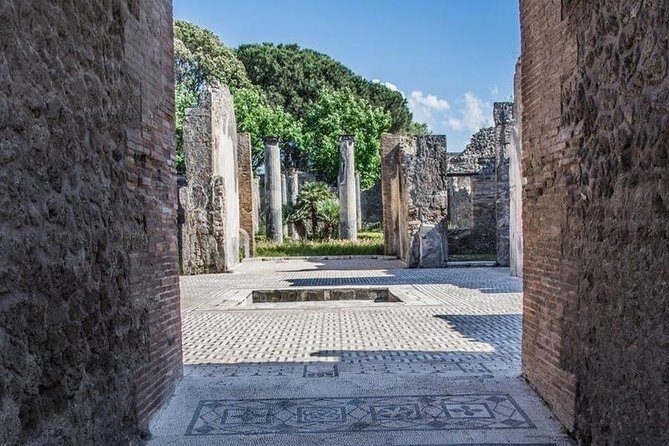
Pompeii is big. Not “walk it while listening to music” big—more like “your legs will get a workout and you’ll still feel lost” big. That’s exactly where this kind of private tour earns its keep. From the start, the plan is to get you from the Sorrento Coast to the Pompeii main entrance smoothly, then let an archaeological guide point you to the places that best explain Roman life.
I also like that the whole experience is designed around time you can count on. The drive is about 40 minutes, you meet your guide at the entrance, and the guided walk is about two hours. That structure matters because Pompeii can swallow a day if you’re not careful with your schedule.
One more practical point: the tour is set up so you’re not piecing things together. You don’t have to figure out transport, tickets, and entry lines one by one. Instead, the driver handles the ride, and the guide handles the meaning.
Other Pompeii tours from Positano



Pickup, timing, and how skip-the-line changes your day

This tour starts at 8:00 am. You’re picked up from hotels on the Sorrento Coast, and then it’s roughly 40 minutes to Pompeii main entrance. You’ll meet your private speaking guide right there, and the guide helps you skip the long line at entry.
Here’s what skip-the-line usually means in real life: it turns a stressful uncertainty (How long will this take?) into a mostly fixed routine (You enter, you go). That’s a huge value on a half-day schedule, because every extra 30 minutes outside the gates can eat into your time inside.
It’s also nice that the logistics are simple at the end. The driver waits at the same entrance, then drives you back to the Sorrento Coast. In other words, you don’t have to negotiate a second meeting point or worry about being late to a pickup window that’s already long gone.
The two-hour Pompeii route: what you’ll actually see
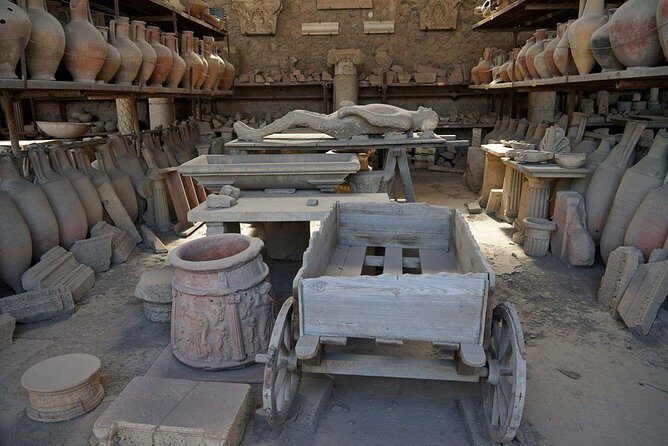
You’re not doing a random stroll through Pompeii. You’re doing a curated walk of major stops that map out key parts of Roman daily life—temples, theaters, baths, and big homes with names you’ll remember.
In about two hours of guided highlights, you’ll walk past or through a selection of notable villas and notable public spaces, including:
- House of Menander
- House of the Gladiators
- House of Julie Felix
- House of Loreius Tiburtinus
- House of Sallust
- House of the Tragic Poet
- House of the Vettii Lupanar
- Temple of Isis
- Suburban baths
That list is important. These aren’t small, vague corners. They’re the kinds of sites that help you build a mental map: where people lived, how public life connected with daily routine, and how spaces like baths fit into the rhythm of the city.
If you like architecture and layout (or if you just want to understand what you’re looking at without reading ten guidebooks), this route is a strong match. If you’re the kind of traveler who wants long unstructured wandering, you may feel the time limit.
Stop-by-stop: villas that explain Roman daily life
The “wow” factor at Pompeii is easy—old stone, dramatic scale, the feeling of stepping into another world. What’s harder is understanding how it all worked. This is where the archaeological guide makes the biggest difference.
Here’s how the villa choices help you see different angles of life:
House of Menander and the idea of a home with personality
The House of Menander is one of the anchors on this route. On a guided walk, you typically learn how the home’s design and rooms relate to everyday behavior. You’re not just looking at walls—you’re getting a sense of how a household functioned as a lived-in unit.
Other guided tours in Positano






House of the Gladiators: built around public spectacle
Even without going into extra technical detail, the name alone hints at what kind of story you’ll be guided toward. You’ll likely come away thinking about how entertainments and status worked in Roman life, not as trivia, but as something that shaped what people cared about.
House of Julie Felix: connecting people to spaces
When a villa has a named occupant like Julie Felix, it’s a prompt to think human. You’ll get context that helps the ruins feel less abstract. The guide’s job is to connect the layout to real people and real routines.
House of Loreius Tiburtinus and House of Sallust: big names, clear takeaways
With stops like House of Loreius Tiburtinus and House of Sallust, the value is comparison. In a limited time window, you’ll see multiple large homes and start noticing differences in how spaces were arranged and used.
House of the Tragic Poet: what stories and taste can teach
This is another stop where the guide can help you read the site. The idea isn’t that you need to know everything about Roman culture before you arrive. It’s that a good guide gives you just enough context to interpret what you’re seeing—so you don’t spend two hours staring without understanding.
House of the Vettii Lupanar: a provocative stop handled with care
This is one of the more distinctive names on the route: House of the Vettii Lupanar. A well-led tour can handle stops like this in a way that stays grounded in what you can observe. You’ll get a better sense of how Roman urban life included places with different functions, not just homes and temples.
Practical tip: when you’re moving through villas, look up as much as you look straight ahead. A guide tends to point out the details that are easy to miss when you’re rushing for the next photo.
Temple of Isis and suburban baths: why public spaces matter
Pompeii isn’t only about private homes. This tour also adds in public or semi-public spaces, which helps your mental picture.
Temple of Isis: a spiritual anchor
Temple of Isis is a key stop because it shifts you from “house” to “belief and gathering.” Even if you’re not studying religion as a topic, it helps to see where people would go for shared meaning.
Suburban baths: daily life beyond the doorway
Bathing complexes are called out in the overall highlights, and the route includes the suburban baths. Baths are one of those daily-life themes that make ruins feel practical. You can leave with a clearer sense that a city like Pompeii wasn’t only homes and streets—it was also routines, community, and places designed for regular use.
This matters for value. If you did Pompeii on your own, you might still see baths and temples, but you might not know what to pay attention to. With a guide, your time inside the park becomes more about understanding than just collecting sights.
Guide quality: what to expect from a good archaeological explanation

The reviews you’ve likely seen about this experience point to a common theme: the guide’s communication. You want someone who can explain without drowning you in facts, and who can keep the group moving so you don’t waste time waiting around.
One guide example that stood out is Rosario, described as an expert who spoke well and stayed clearly informed. That style is exactly what I look for on a site like Pompeii: the information should land in a way you can remember while you’re walking.
Also, pay attention to pacing. This tour keeps the exploration tight at around two hours, but the guide still covers a wide set of major locations. That only works if the guide has control of timing, so the stops feel like part of a story rather than a checklist.
Getting great photos without turning the tour into a selfie contest

This isn’t a photo-only tour, but it’s also not a “no stopping” situation. One detail from an excellent day: the driver knew a best place to take a picture and even helped with forgotten items, like retrieving a phone after a stop.
That kind of care changes how the experience feels. When someone is paying attention to small problems—timing, where to pull over, what needs to be rechecked—your day runs smoother.
My advice: set your photo expectations. Go for a few strong shots at the stops the route includes, not constant stopping. The tour is built to fit a lot into a half day, and the best results come when you let the guide steer you to the most meaningful views.
Price and logistics: does $296.71 feel fair?
At $296.71 per person, this is not a budget excursion. But it’s also not just a ticket and a bus.
You’re paying for a bundle of value that adds up in the real world:
- Pickup and round-trip transportation from the Sorrento Coast
- Skip-the-line admission helped by the guide at the entrance
- Private speaking archaeological guide for the highlights walk
- Admission ticket included, plus a mobile ticket for easier on-the-day use
- The driver waits at the entrance so you don’t lose time negotiating return
If you tried to assemble the same day on your own, you’d spend time lining up for entry, coordinating transport, and figuring out how to focus inside a huge site. Even if you found cheaper tickets, the cost of time and stress is real, especially at an early 8:00 am start.
So who should consider paying this price? People who want a guided, efficient visit and who’d rather spend money than manage logistics. If you love free-form wandering and you’re comfortable building your own route, you might spend less by doing it independently. If you want clarity, a structured route, and less friction, this price starts to look more reasonable.
Who this Pompeii tour is best for (and who should skip it)
This is a smart fit if you:
- Want a half-day Pompeii plan without figuring out tickets and transport
- Prefer an expert guide to interpret what you see in the villas and public spaces
- Like named stops and a route that makes Pompeii easier to understand
- Are traveling in a small private group and want your time protected
It may not be your best match if you:
- Want many hours of independent wandering inside the archaeological park
- Are sensitive to early mornings since the start is 8:00 am
- Plan to stop constantly for long breaks and detours (the guided structure is part of the value)
Also, if you’re traveling with someone who likes learning but can lose interest with slow pacing, a two-hour highlights walk is often a good compromise.
A practical checklist for your Pompeii visit
You’ll be walking a lot, and you’ll be moving through multiple stops. To get the most from the guided two hours, I’d plan like this:
- Wear comfortable shoes you can trust on uneven ground
- Bring a light layer for morning air changes
- Keep water on hand if you typically run dry when you walk
- Decide in advance what you want most: villas, temples, or baths—then let the guide connect the dots
- If you care about photos, pick a few priority moments rather than trying to photograph everything
One more helpful idea: use the guide’s context to choose what you linger on. If the guide points out a detail, that’s usually where your attention will feel rewarded.
Should you book this Pompeii tour with Pompeii Trip&Transfer?
If you want Pompeii to feel understandable—not just impressive—this is the kind of tour that earns a booking. The mix of skip-the-line admission, an archaeological guide who keeps the walk focused, and door-to-door style pickup from the Sorrento Coast makes it a low-stress way to see the highlights in limited time.
I’d book it if you value efficiency and interpretation. I’d think twice if you know you want a slow, self-guided day inside the park.
From the practical side, you also get a day that runs on rails: meeting at Pompeii main entrance, guided highlights for around two hours, then your driver waiting for the return.
If that sounds like your kind of travel—do it.
FAQ
How long is the Pompeii tour?
It runs about 4 to 5 hours total, with approximately 2 hours exploring Pompeii with the guide.
What time does the tour start?
The start time is 8:00 am.
Where are you picked up?
You’re picked up from hotels in the Sorrento Coast area.
Is skip-the-line entry included?
Yes. Admission includes skip-the-line entry help at Pompeii main entrance.
What does the guided portion include?
The guide helps you see major highlights, including selected villas and public spaces such as Temple of Isis and the suburban baths.
Is this tour private?
Yes. It’s a private tour/activity, and only your group participates.
What’s included in the price?
Admission ticket is included, and you’ll have round-trip transportation from the Sorrento Coast.