REVIEW · POSITANO
Positano: Old Town Walking Tour with Archaeologist Guide
Book on GetYourGuide →Operated by Tour Guide Naples SRL · Bookable on GetYourGuide
Positano’s stairs turn a walk into a story. This small-group Old Town and Downtown Positano tour blends scenic walking with archaeology, capped by a guided visit to an underground Roman villa with frescoes. I especially like how the guide team brings the town to life, and names like Lucianna and Emilia come up for a reason: they’re energetic, organized, and easy to follow in the tight streets.
The route is active, though. There’s a significant amount of walking, including going down stairs to beach areas, so stairs are the one real drawback to keep in mind.
In This Review
- Key things that make this tour worth your time
- Start at Hotel Pasitea: quick orientation before the real walking begins
- What I’d do to make the most of it
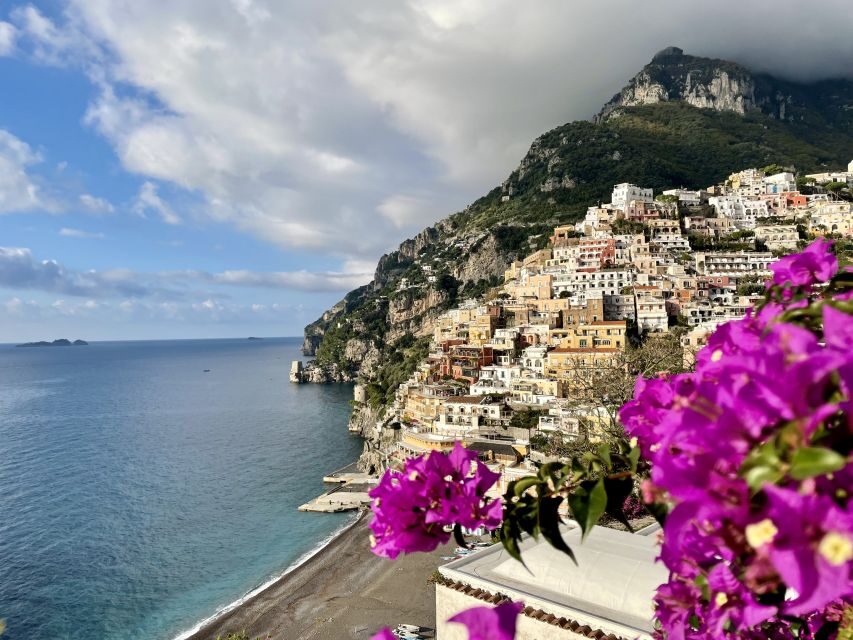
- Old Town lanes, a medieval fort, and those famous Positano staircases
- The practical reality: this is a walking tour
- Fornillo Beach and the views: more Positano, less crowding
- Photo note that actually helps
- Downtown Positano: shops, ceramics, and the street-level rhythm of the town
- Where Santa Maria Assunta fits into the story
- The underground Roman Villa: frescoes you can’t get from street level
- Why an archaeologist guide adds value here
- Meeting points, timing, and how the tour flows back through Positano
- Group size: why “small” feels different here
- Languages, guide energy, and hearing what you’re paying for
- Price and value: is $112.15 per person fair?
- When it might not be the best spend
- Who should book this tour (and who should skip it)
- Should you book this Positano Old Town and Archaeology Walking Tour?
- FAQ
- How long is the Positano Old Town Walking Tour?
- How big is the group?
- Where does the tour start and end?
- What languages are available for the guide?
- Is the Roman villa entrance ticket included?
- Does the tour run in bad weather?
- Is this tour wheelchair-friendly or stroller-friendly?
Key things that make this tour worth your time
- Underground Roman villa with an archaeologist guide and fresco-filled rooms you can’t see on your own
- Small group (max 10), which helps you hear your guide and move through Positano without feeling herded
- Beach time beyond the main stretch, including Fornillo Beach where locals sunbathe
- Old Town + Downtown mix, so you get both the photo views and the working-shop Positano street life
- A stair-and-hill route with planned breaks, including time away from the densest tourist flow
- Multiple languages (English, Italian, German, Spanish) so you’re not stuck with generic commentary
Start at Hotel Pasitea: quick orientation before the real walking begins
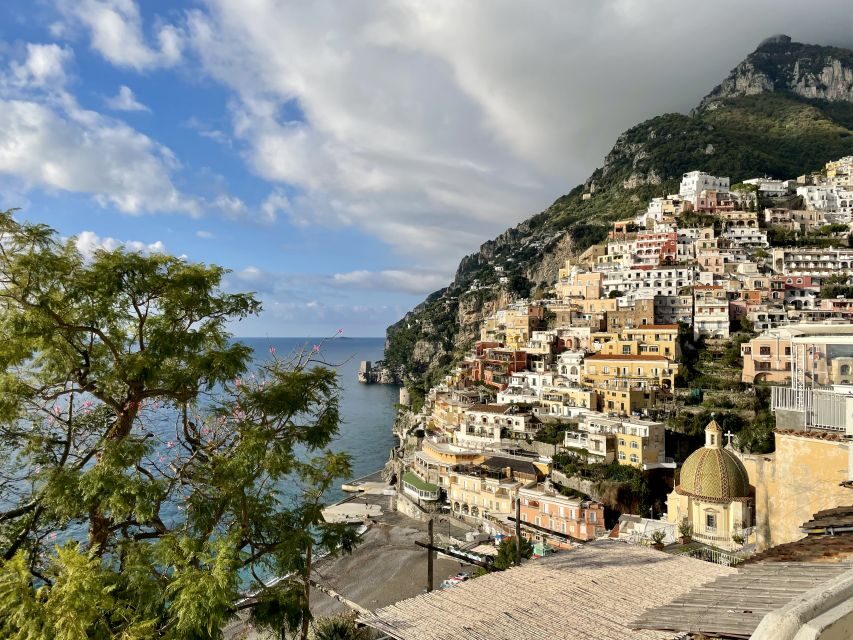
Most Positano days start with you squinting up at the steep hills, trying to figure out where you are and where you’re supposed to go next. This tour begins at Art Hotel / Hotel Pasitea, and that matters more than it sounds. When you start with a guide who knows the “up” and “down” of the town, you get your bearings fast and you stop second-guessing every turn.
Expect a 2-hour experience that runs rain or shine. That’s helpful because Positano weather changes fast, and your plan shouldn’t collapse the moment the clouds roll in. You’ll also be walking at a steady clip; this isn’t a slow sightseeing stroll with long café pauses.
Other Positano walking tours we've reviewed



What I’d do to make the most of it
Wear shoes you trust on stone steps. If you’re the type who likes to keep one hand free for photos, you’ll be glad you’re not fighting slippery soles. And bring sunglasses and water—your guide will cover the route, but the sun and salt air still show up whether it’s clear or not.
Old Town lanes, a medieval fort, and those famous Positano staircases
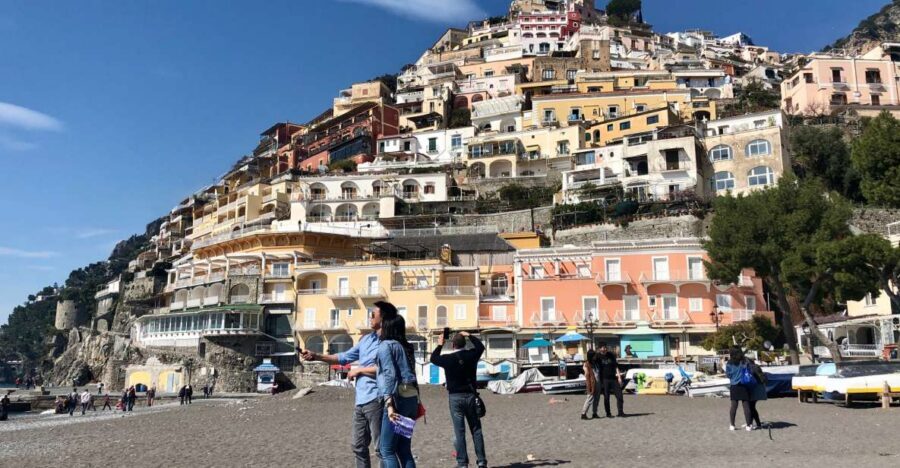
The heart of this tour is the Old Town wandering—tiny lanes, hidden paths, and panoramic staircases that make Positano what it is. The tour description specifically points to leaving the busiest tourist zones behind for a well-deserved break, then following the guide into spots that feel more local and less like a theme park.
One highlight along the way is a 13th-century fort from the medieval era. Even if you’re not a history person, stopping near a structure like that changes how you see the town. Positano isn’t just a pretty coastline—it’s layered. The fort reminder makes the steep geometry feel purposeful, not random.
You’ll also pass through areas where the street width forces you to slow down. That’s not a flaw; it’s how you get good photos without constantly stopping for traffic. The best part is that your guide helps you understand what you’re looking at so the scenery doesn’t stay “pretty” and nothing more.
The practical reality: this is a walking tour
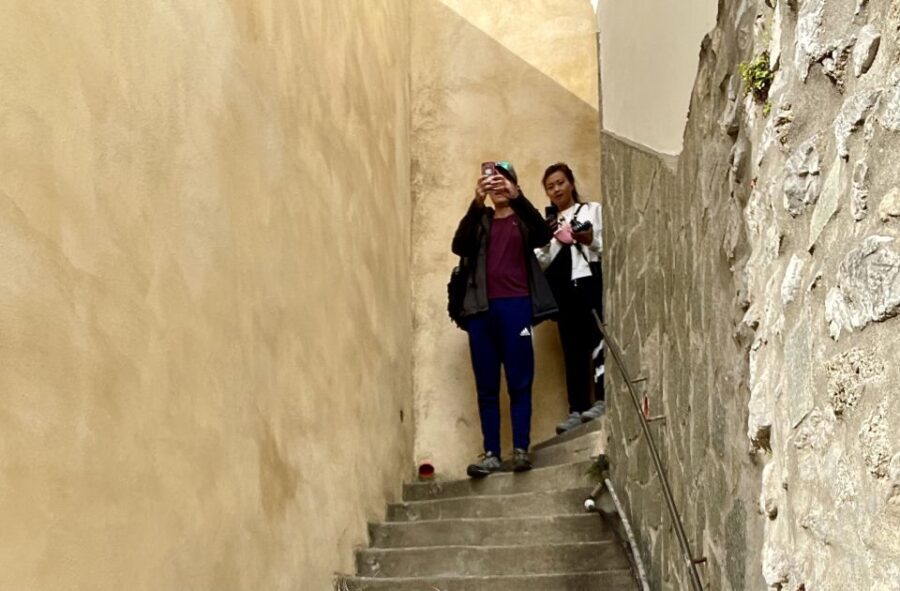
This is where the tour’s one drawback comes in. The route involves a significant amount of walking, and the path down toward beach areas uses stairs. If stairs already feel like a problem for you in everyday life, I’d consider skipping or choosing a different style of tour.
Fornillo Beach and the views: more Positano, less crowding
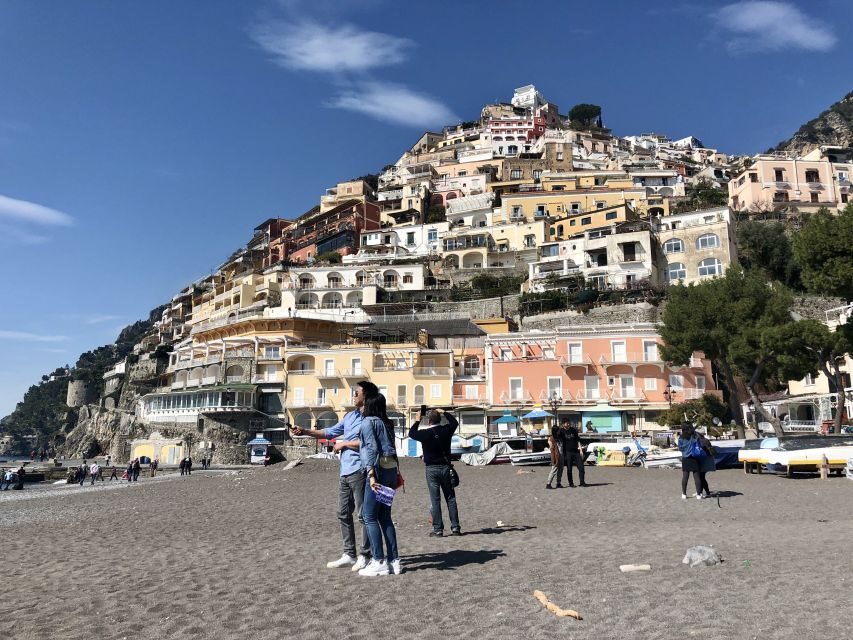
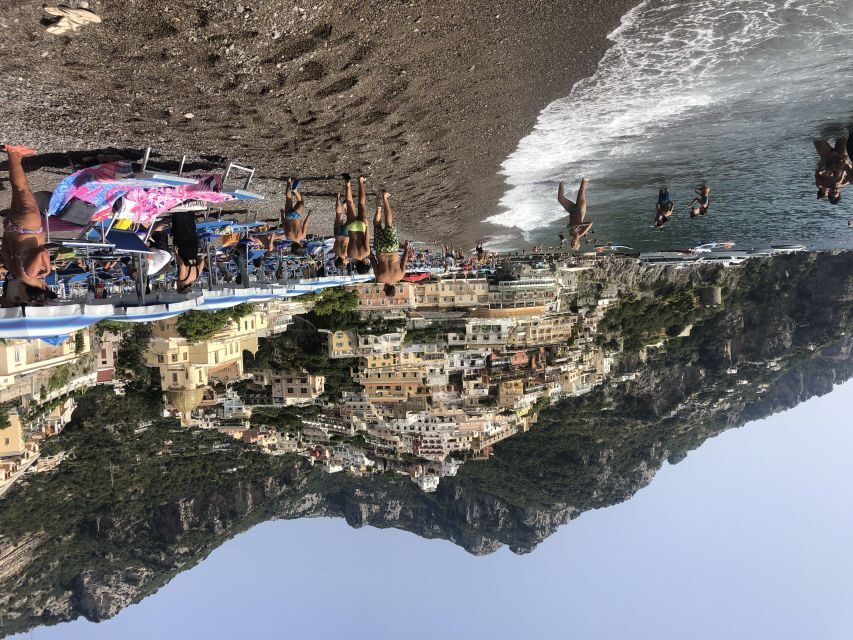
A good Positano tour gives you the classic view moments and helps you find the quieter corners. This one does that. You’ll feel the sun on your skin while taking in spectacular vistas from the central beach area, and then you’ll spend time at Fornillo Beach, described as a place locals go to sunbathe.
Fornillo is interesting because it’s not the main tourist poster beach. It’s still a beach scene, but it can feel more like a neighborhood stop than a must-see checklist. On a day when you’re already climbing and descending, having a beach break that isn’t just standing in a souvenir queue is a win.
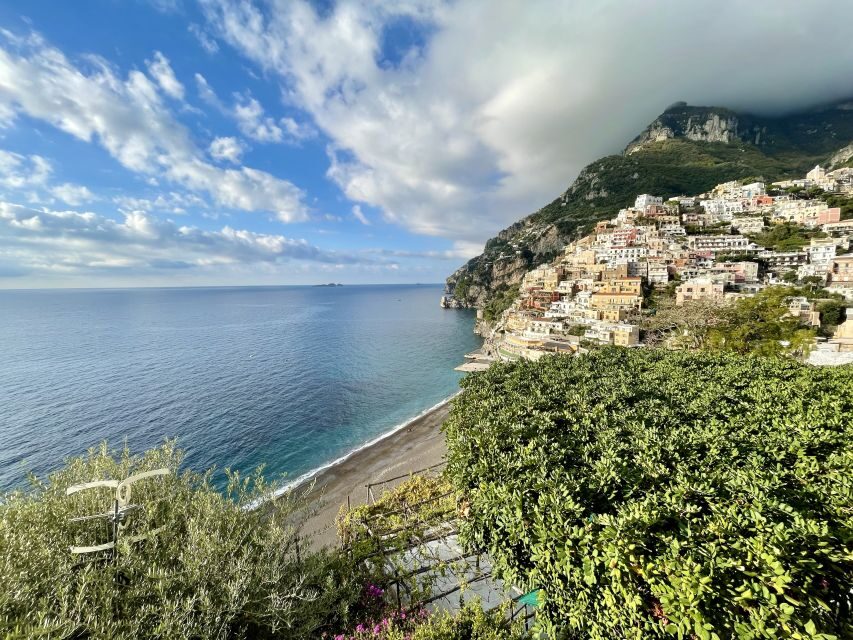
Then you’ll connect back toward the main shoreline, including Spiaggia Maggiore. That’s the big-name beach where you’ll get the full Positano “this is the postcard” payoff—especially once your guide points out what to watch for from the walking route.
Other walking tours we've reviewed in Positano




Photo note that actually helps
Bring your camera habits down to one simple rule: shoot while you’re standing still. The stair rhythm means if you keep taking photos while moving, you’ll miss the view parts your guide is calling out. Plan for short pauses—your guide will naturally stop at key points.
Downtown Positano: shops, ceramics, and the street-level rhythm of the town
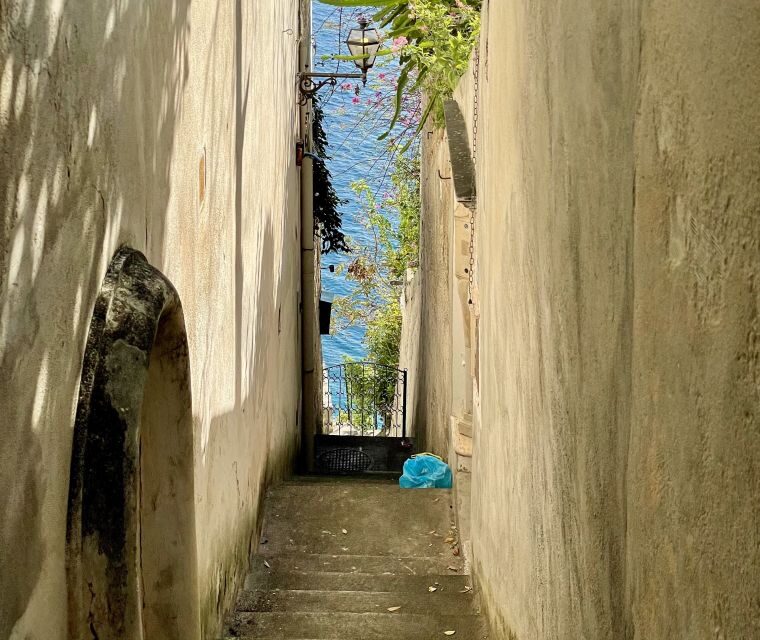
Positano has two faces that visitors often mix up: the postcard village look and the real working-town look. This tour moves from Old Town toward Downtown Positano, where you’ll find fine shops, restaurants, and the street feel that comes from daily commerce.
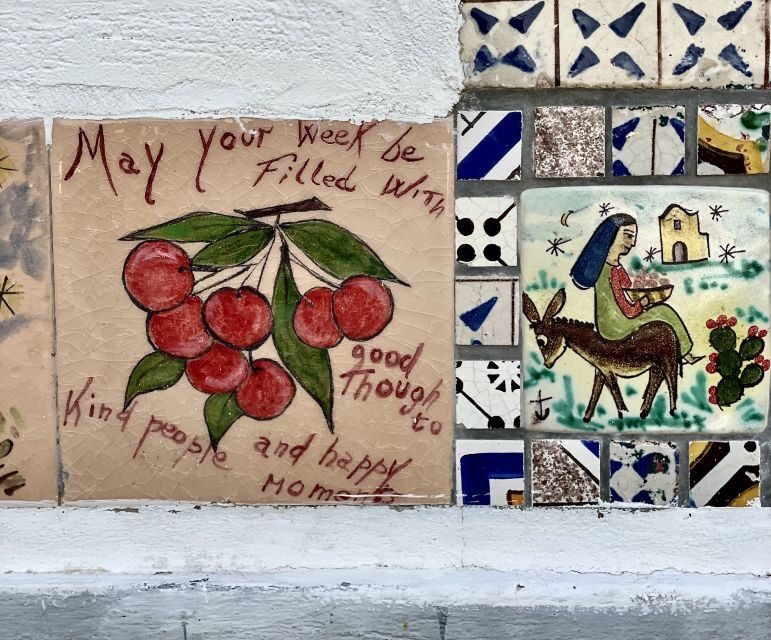
As you go downhill and then back uphill, you’ll notice the craft streets. The itinerary mentions a street with variety: ceramic shops, sandal makers, and shoemakers, plus galleries showing local artists’ work. This is the kind of detail that can turn a walking tour into something useful. Instead of just taking photos and moving on, you start to understand what the town sells, who makes it, and how art shows up in everyday storefronts.
Where Santa Maria Assunta fits into the story
You’ll approach the Church of Santa Maria Assunta, originally the abbey of Positano’s 10th-century Benedictine monastery. That time depth matters. When you connect the church to the monastery roots, the whole walk shifts from “pretty streets” to “a place with continuity.”
Even if you only see the exterior at first, it sets up the final act: the archaeology visit below.
The underground Roman Villa: frescoes you can’t get from street level
This is the reason many people book the tour in the first place: the visit to an underground Roman Villa that’s recently discovered and open to the public. You won’t just walk past it—you’ll go inside with an archaeological guide, which is the difference between seeing a site and understanding it.
The tour description highlights amazing frescoes, and that’s what you should pay attention to. Frescoes tend to make the Roman world feel immediate because they’re art, not just ruins. And being underground changes how the space feels. Even on a sunny day above, you’ll be stepping into a cooler, quieter environment where the past is literally under your feet.
Why an archaeologist guide adds value here
A Roman villa visit without context can turn into a quick look and a walk-out. With a guide, you get a framework for what you’re seeing: why it was built where it was, what the space was used for, and how the discovery connects to the town’s longer timeline.
Also, the tour is small enough that you’re not stuck trying to read signs while someone stands in front of you. The guide can slow down when needed and keep moving when the group is ready.
Meeting points, timing, and how the tour flows back through Positano
You start at Art Hotel / Hotel Pasitea. The experience includes stops through Old Town and Downtown, and you’ll finish at Piazza dei Mulini. At the same time, the activity notes that it ends back at the meeting point area. Practically, that means you should expect to return toward central Positano rather than being dropped somewhere far away where you need extra transport.
The walking cadence matters: this tour is 2 hours, but it’s not 2 hours of constant movement without pauses. Your guide will structure the route, including time away from the busiest crowd areas, and you’ll have moments where the scenery and the beach break the walking rhythm.
Group size: why “small” feels different here
Limit is 10 participants. In a place like Positano, that’s not just comfort—it’s how you get a better experience. Smaller groups move more smoothly on narrow lanes, and it’s easier to hear your guide when you’re near stairs and steps where sound carries oddly.
Languages, guide energy, and hearing what you’re paying for
The tour runs with live guiding in English, Italian, German, and Spanish. That’s a big deal because the point of the archaeology stop isn’t just the ticket—it’s the explanations that connect streets above to history below.
In the feedback tied to guide performance, Lucianna is called out for enthusiasm and knowledge, while Emilia is described as delightful and informative. Another detail that stood out is that one guide (described as male) spoke clearly enough for a guest using hearing aides, and that clarity improved the overall experience. In other words: this isn’t a tour where you stare at plaques hoping you’ll learn something.
Price and value: is $112.15 per person fair?
At $112.15 per person for a 2-hour tour, you’re paying for more than a route. You’re getting:
- a local licensed guide
- an archaeological guide
- a Roman villa entrance ticket
In Positano, the cost of doing history properly can rise quickly if you try to combine separate tickets, private logistics, and multiple stops. Here, the price bundles the essentials into one experience with a plan that already accounts for the town’s steep layout.
Is it “cheap”? No. But it’s fairly priced for what you actually get: guided walking through Old Town and Downtown, plus a ticketed underground archaeology visit with explanation. If your goal is to maximize both scenery and interpretation in limited time, this is a strong value.
When it might not be the best spend
If you mainly want a long beach day or you’re traveling with mobility limits that make stairs difficult, this specific structure may feel like a mismatch. In that case, you might do better with a tour that’s less step-heavy or more focused on views from flatter areas.
Who should book this tour (and who should skip it)
You’ll likely love it if:
- you want Old Town + Downtown in one outing
- you care about the underground Roman villa and frescoes enough to want expert guidance
- you appreciate a small group and clear explanations
- you’re okay with stairs and a hill-heavy walking route
You might skip it if:
- you need wheelchair access (it’s not suitable for wheelchair users)
- you rely on baby strollers (strollers aren’t allowed)
- stairs are a no-go for your body
- you’re over the listed limits for suitability (not suitable for people over 331 lbs / 150 kg or over 95 years)
Should you book this Positano Old Town and Archaeology Walking Tour?
If your ideal Positano day includes more than just walking past viewpoints, I’d book it. The combination is the selling point: beach scenery (including Fornillo and Spiaggia Maggiore) plus an archaeology stop that’s actually explained, not just shown. And the small-group size keeps the experience personal enough to feel worth the $112.15 price tag.
My one caution is simple: if you’re sensitive to stairs, don’t treat this like a light walking tour. The down-to-the-beach stairs are real, and you’ll earn those views.
FAQ
How long is the Positano Old Town Walking Tour?
The tour lasts 2 hours (starting times vary by availability).
How big is the group?
It’s a small group limited to 10 participants.
Where does the tour start and end?
Meet your guide in front of the main entrance of Art Hotel / Hotel Pasitea. The tour ends at Piazza dei Mulini and the activity information also indicates it ends back at the meeting point.
What languages are available for the guide?
Guiding is offered in English, Italian, German, and Spanish.
Is the Roman villa entrance ticket included?
Yes. The tour includes Roman villa entrance ticket plus an archaeological guide.
Does the tour run in bad weather?
Yes. The tour takes place rain or shine.
Is this tour wheelchair-friendly or stroller-friendly?
No. It’s not suitable for wheelchair users, and baby strollers are not allowed.