REVIEW · POSITANO
Private Skip-the-Line Pompeii & Mt. Vesuvius Tour from Positano
Book on Viator →Operated by IAMME IA! - Gray Line Amalfi Coast · Bookable on Viator
Pompeii and Vesuvius in one tight day. If you want your Amalfi trip to feel truly different, this is a smart way to cover two icons with priority access and a real licensed guide for Pompeii. You start with door-to-door pickup from Positano, then move straight into the ruins before heading up Vesuvius.
I love how the plan uses a private ride instead of forcing you to figure out timing on your own. I also like that you’re not just walking around Pompeii blind—guides like Monica, Carmine, Roberta, and Vito show up with focused stops, so you see the major areas in the time you have.
One possible downside: you’re still doing a long, hot day and a steep hike. Pompeii has lots of sun with limited shade, and the path to the crater edge is uneven, so good shoes and water matter more than you’d think.
In This Review
- Key things to know before you go
- Door-to-Door Pickup That Gets You Out of Positano Fast
- Priority Access to Pompeii: Why This Format Works
- Your Pompeii Route: Forum Life, Baths, Brothel Art, and Big Mosaics
- The heart of the city: Foro de Pompeya and the Forum buildings
- Macellum and Via dell’Abbondanza: food supply and the main street pulse
- Stabian Baths: everyday comfort in separate men and women spaces
- Lupanar: the brothel and what the wall paintings reveal
- Casa del Fauno: wealth you can see at a glance
- Teatro Grande and the Basilica: public space for theater and court business
- Vesuvius National Park: The Crater Edge, the Uneven Path, and the Gulf Views
- Vulcan’s volcano: what you’re looking at when you’re near the crater
- Timing and Pace: What This 8-Hour Day Feels Like on Your Feet
- Price and Logistics: Is $750.91 Per Person Worth It?
- Who Should Book This Tour from Positano
- Should You Book This Pompeii and Vesuvius Day Trip?
- FAQ
- How long is the private Pompeii and Vesuvius tour from Positano?
- Is hotel pickup included in the tour price?
- Does the tour include admission to Pompeii and Vesuvius?
- Is there skip-the-line or priority entry?
- Do I need to bring my own tickets?
- Is lunch included?
- What language is the tour offered in?
- What happens if Vesuvius is closed due to bad weather?
- Is the tour private?
Key things to know before you go
- Skip-the-line priority at both Pompeii and Vesuvius helps you start seeing, not waiting
- Pompeii guide time is concentrated on the Forum, baths, theater, and elite houses
- Crater edge walk at about 1,280 m for big Gulf of Naples views
- Uneven trail on Vesuvius means you’ll want a steady hiking step
- Tickets and park admission included, but lunch is not, so plan your food timing
Door-to-Door Pickup That Gets You Out of Positano Fast
Positano is beautiful, but getting around it can be slow. This tour meets you by pickup at your hotel when the vehicle can reach it. If your street is too tight for the driver to pull up, you’ll be directed to the closest practical meeting point instead.
The payoff is simple: you reduce the stress of transfers and you gain time inside Pompeii. Your driver is English-speaking, and the whole day runs on a private vehicle plan, not a public bus schedule.
Other Pompeii tours from Positano

Priority Access to Pompeii: Why This Format Works
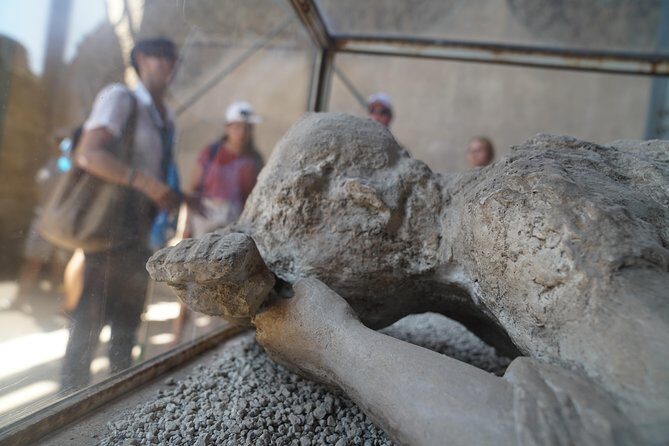
Pompeii is huge. Even if you love ruins, walking for hours without a plan can turn into a lot of staring at stone and signage. The biggest value here is priority access, meaning you spend less time in ticket lines and more time in the city.
You also get Pompeii admission handled as part of the tour. With the mobile ticket format, you’re not scrambling for paper tickets at the last second.
Once you’re in, the day is structured around short, meaningful stops rather than trying to cover everything. That’s the smart move for first-timers and for anyone who wants the highlights without sacrificing the view of the big picture.
Your Pompeii Route: Forum Life, Baths, Brothel Art, and Big Mosaics
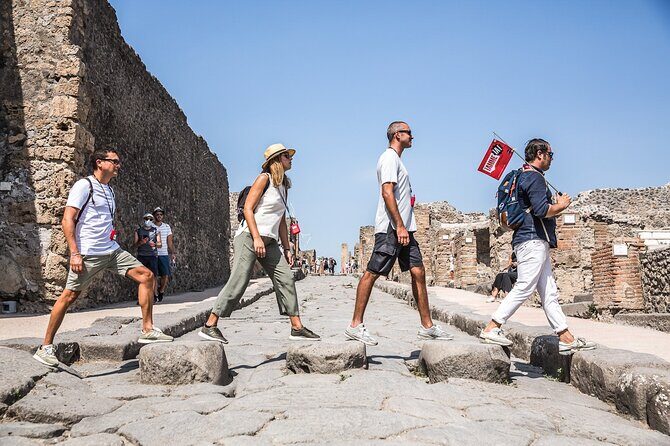
This day is built around a guided walk through the places that help you understand how Pompeii worked: civic space, shopping streets, everyday housing, and the sites that reveal wealth.
The heart of the city: Foro de Pompeya and the Forum buildings
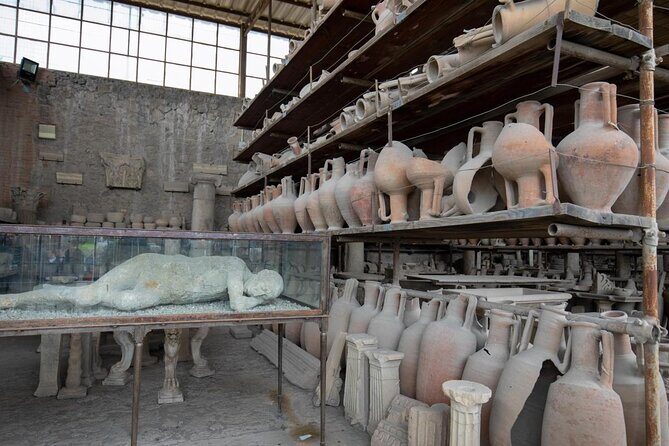
You start with the Foro de Pompeya, the central market and political hub. This is where you can picture daily movement—traders, citizens, and public decisions all in one place. Nearby, you’ll also see the Temple of Jupiter Capitolinus (Tempio di Giove Capitolino), with statues of Jupiter, Juno, and Minerva placed to be visible from the Forum.
Quick note: those short stops can feel like speed-running if you’re hoping to read everything in depth. But for Pompeii, speed is the whole point—your guide’s job is to point your attention where it matters.
Macellum and Via dell’Abbondanza: food supply and the main street pulse
You’ll pass the Macellum, Pompeii’s provision market. Even in ruins, it helps you understand how the city fed itself and how business happened in the open.
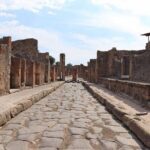
Then comes Via dell’Abbondanza, the ancient main street (a decumanus maximus). This is where it clicks that Pompeii wasn’t just temples and houses—it was workshops, cafés, snack-bars, and restaurants for food and drink, all packed into one street.
Other Mt Vesuvius tours from Positano

Stabian Baths: everyday comfort in separate men and women spaces
Next is the Stabian Baths (Terme Stabiane), behind the Temple of Jupiter. This stop is great because baths were a social center, not just a place to wash. Your guide walks you through the idea of separated entrances for men and women, plus the sequence of rooms: apodyterium (dressing), tepidarium (warm), frigidarium (cold), and calidarium (hot).
You’ll also learn the broader timeline of damage in Pompeii. The baths were heavily damaged during the earthquake of 62 AD, long before the 79 AD eruption. That detail makes the ruins feel less like a museum and more like a city in a long, complicated story.
Lupanar: the brothel and what the wall paintings reveal
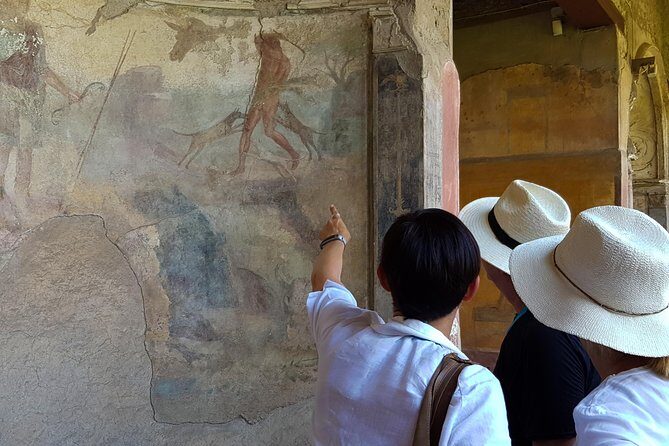
The Lupanar of Pompeii is one of the most famous sites in the city. It’s known for its erotic paintings on the walls, and it’s also called Lupanare Grande. If you prefer your history less graphic, you might feel this stop is intense—but it’s also exactly the kind of candid detail that makes Pompeii feel real.
Go in knowing it’s not subtle. Then treat it like a window into social life, not an attraction you have to enjoy.
Casa del Fauno: wealth you can see at a glance
Casa del Fauno (House of the Faun) is the big showpiece among private residences. It takes up an entire block and is named for the bronze faun statue in the atrium.
The highlight here is the Alexander Mosaic, a famous floor mosaic depicting the battle between Alexander the Great and Darius III. You’ll also hear how the house shows Hellenistic influence mixed with Roman architecture, plus details like peristyle gardens and intricate floors that signal the power of elite families.
Teatro Grande and the Basilica: public space for theater and court business
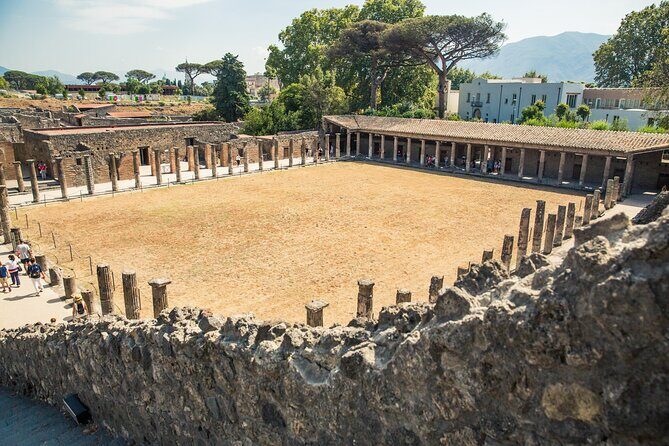
Next you’ll see the Teatro Grande, a theater built on a hillside slope, divided into sectors. The theater type matters: it reminds you that Pompeii wasn’t just a trade city—it had organized performances and public culture.
Finish the Forum-focused area with the Basilica, one of the most sumptuous Forum buildings, used for business and administration of justice. Put together, these stops show the city as a machine: civic space, commerce, entertainment, and governance all operating in the same zone.
Vesuvius National Park: The Crater Edge, the Uneven Path, and the Gulf Views
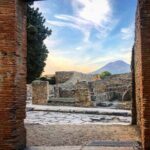
After Pompeii, the day shifts from walking city streets to climbing a volcano. The Vesuvius portion includes Vesuvius National Park entrance, with priority access built into the plan.
The goal is to reach the crater’s edge at around 1,280 meters, where the Gulf of Naples panorama can feel unreal in both scale and color. The path is uneven, so you’re not doing a stroll—you’re hiking.
Then you’re taken back down to about 1,000 meters for the drop-off point. That gives most people enough time to recover, take photos, and keep the day from turning into a full endurance event.
Vulcan’s volcano: what you’re looking at when you’re near the crater
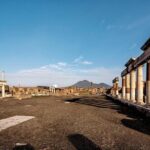
You’ll learn Vesuvius basics while you hike: it’s a somma-stratovolcano, connected to Monte Somma. The park is also named using the Roman god of fire and metal forgery, Vulcan.
You may hear a serious science layer too. The information provided for the tour notes that the next eruption is considered overdue and that monitoring happens 24/7. Even if you just want the views, knowing the stakes makes the experience feel more meaningful.
Timing and Pace: What This 8-Hour Day Feels Like on Your Feet
This is built as an approximately 8-hour day, but what you’ll feel is not the clock—it’s the walking time and sun exposure.
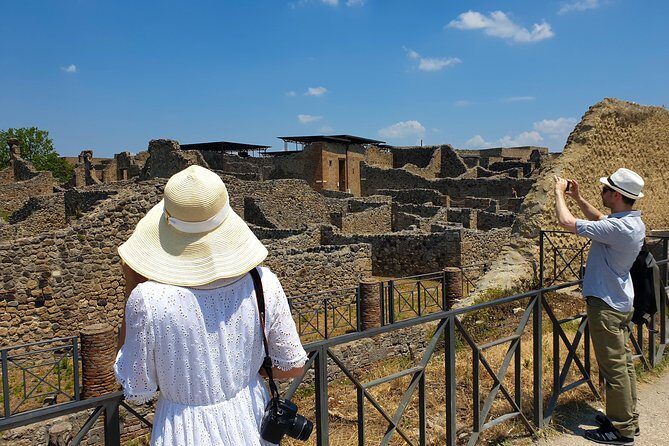
In Pompeii, the guide covers key areas through short stop windows. You’re not trapped at one spot for hours, but you are still moving constantly across a large site. On Vesuvius, the climb is a steeper, rockier kind of effort.
From the practical side, I’d plan your day like this:
- Wear shoes with grip for uneven ground.
- Bring water and sun protection for Pompeii.
- Expect cooler air higher up on Vesuvius, especially if there’s wind.
Also, a heads-up on commentary pacing: the Pompeii guide typically drives the information in the ruins. Once you’re on the volcano slope, the experience can feel more self-guided while you follow the group and route.
Price and Logistics: Is $750.91 Per Person Worth It?
At $750.91 per person, this isn’t a budget day trip. The value comes from the mix of things that are hard to bundle yourself—private transport, guide time for Pompeii, and admission handling for both Pompeii and Vesuvius.
If you were trying to DIY it, your day could easily get eaten by lines, timing mismatches, and the extra stress of getting from Positano to both sites. Here, the plan is designed to remove those friction points.
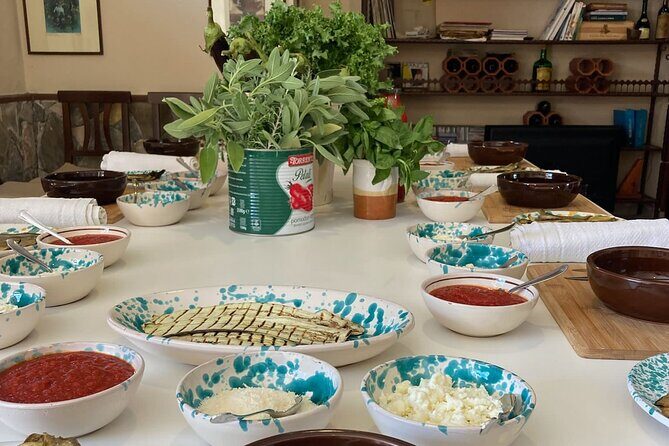
Where the money can feel less satisfying is food. Lunch is not included, and at least part of your meal time may depend on a quick stop between Pompeii and the volcano. Some people have found meal stops rushed or basic. If you care a lot about lunch quality, consider treating lunch as a separate plan—either eat earlier or choose a simple option that fits your appetite and energy.
Who Should Book This Tour from Positano
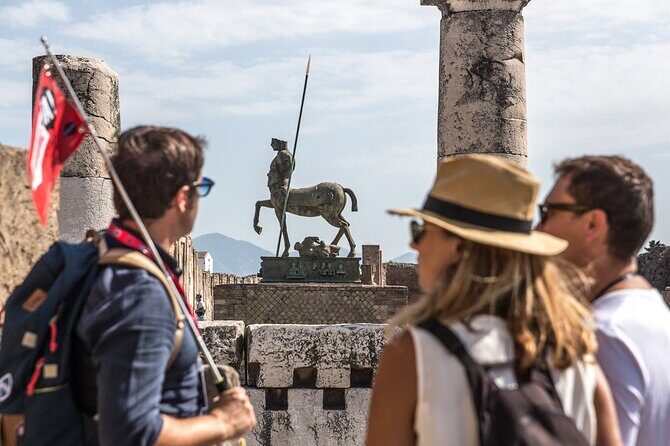
This tour makes the most sense if:
- You want to see the big Pompeii highlights without spending days planning the route.
- You like guided storytelling in the ruins, then a physical challenge with the volcano views.
- You value priority entry and want to spend your energy looking at sites, not standing in lines.
It may be a tougher fit if:
- You hate hikes or have limited mobility for uneven ground and steep sections.
- You need lots of quiet time alone inside Pompeii. With a guided highlight approach, you’ll see a lot, but not everything.
- You strongly prefer lunch to be included and well-organized. Lunch isn’t part of the package.
Families can work too, as long as everyone is comfortable with the walking pace and the hike effort. If you’re traveling with kids, it helps to go in thinking of the day as active, not relaxed.
Should You Book This Pompeii and Vesuvius Day Trip?
Book it if you want a smooth day that hits the essentials: priority entry, a focused Pompeii guide route, and the crater-edge payoff at Vesuvius. This is one of the best formats for Positano visitors who want more than beaches and viewpoints.
Skip it (or switch to a different style) if you want a slow, open-ended Pompeii afternoon or if the idea of uneven hiking on a volcano makes you nervous.
If you do book, go prepared: good shoes, water, sun protection for Pompeii, and a jacket layer for higher elevation. That combo turns the long day from a grind into a great story you’ll still be telling weeks later.
FAQ
How long is the private Pompeii and Vesuvius tour from Positano?
It runs about 8 hours (approx.).
Is hotel pickup included in the tour price?
Pickup is offered from your hotel if it’s reachable by vehicle. If not, you’ll meet at the closest possible meeting point.
Does the tour include admission to Pompeii and Vesuvius?
Yes. Admission to Pompeii and Mount Vesuvius National Park is included, and Vesuvius entrance tickets are included.
Is there skip-the-line or priority entry?
Yes. The tour includes priority access to the Pompeii Archaeological Site and priority access to Mount Vesuvius National Park.
Do I need to bring my own tickets?
You’ll use a mobile ticket.
Is lunch included?
No. Lunch is not included.
What language is the tour offered in?
The tour is offered in English.
What happens if Vesuvius is closed due to bad weather?
If Vesuvius is closed because of bad weather, you’ll receive a refund of the entrance fees for the volcano.
Is the tour private?
Yes. It’s a private tour/activity, so only your group participates.