REVIEW · POSITANO
Positano Spaghetti experience
Book on Viator →Operated by Barba Angela · Bookable on Viator
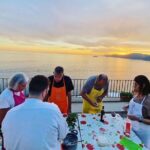
Cooking in a Positano home beats a restaurant. This hands-on class is all about classic coastal comfort food, taught right in Barba Angela host family space, with stories about how the dishes came to be. You start with a Prosecco aperitivo, cook your own pasta (plus dessert), and finish with everyone eating together.
I love the small group size (max 10). It makes it feel personal, and you get real time to learn rather than just watching from the sidelines. I also love that you’re not doing just one pasta trick: the experience focuses on three different spaghetti/pasta preparations paired with different sauces, plus tiramisù.
One thing to think about: getting to the villa and garden involves stairs. If you’re not steady on your feet, plan ahead and consider how long you’ll be climbing.
In This Review
- Quick reasons to book this Positano class
- A Positano cooking class that feels like someone’s real routine
- Getting there: Piazza Cappella, Montepertuso, and stairs to the villa
- Before you cook: Prosecco aperitivo plus local snacks
- The garden-to-table angle (and why it matters)
- Cooking pasta in a real family kitchen: spaghetti + sauce skills
- What to watch for while you cook
- Tiramisu time: dessert you can repeat at home
- The family-style meal: when you finally get to eat
- Price and value in Positano: paying for ingredients, teaching, and time
- Who this class suits best (and who might not love it)
- So, should you book it?
- FAQ
- How long is the Positano Spaghetti experience?
- Where does the experience start and end?
- What language is the class offered in?
- Is there a limit on group size?
- What dishes will I make during the class?
- What food and drinks are included?
- Is the class held in a home?
- Do I need cooking experience to join?
- Is it hard to get to the venue?
- What is the cancellation policy?
Quick reasons to book this Positano class
- A home table meal: you cook and then eat everything family-style
- Prosecco aperitivo up front with cheese and fresh salami
- Three pasta variations with sauces like cherry tomatoes and lemon pesto
- Tiramisu instruction plus a hands-on dessert finish
- Garden time: you’ll tour the place where ingredients come from
- English offered in a group capped at 10
A Positano cooking class that feels like someone’s real routine
If you’ve ever done a cooking class that felt staged, this is the opposite. The setup here is a private home kitchen, not a demo show. You’re learning the kind of food locals actually make and talk about—spaghetti paired with the flavors of the coast, plus tiramisù as the sweet finish.
What makes it especially appealing is how the experience ties cooking to place. The host doesn’t just hand you steps; you also hear the reasons behind the food—how traditions get passed down and how the coast’s ingredients shape what ends up on the plate. It’s the difference between learning recipes and learning context.
Also, the tone is friendly. Multiple reviews point out how the host family makes people feel like part of the group, not like a customer in an itinerary. That matters in a place like Positano, where you can easily end up “consuming” the town instead of connecting to it.
Other pasta-making classes in Positano


Getting there: Piazza Cappella, Montepertuso, and stairs to the villa

The class starts at Piazza Cappella, 84017 Positano SA, Italy, and the activity ends back at the same meeting point. The itinerary lists Montepertuso as Stop 1, so you’ll be working through that part of the area as part of the flow before you reach the home setting.
Logistics in Positano can be a bit of a puzzle, and this experience leans into that reality. Reviews mention that transportation can be coordinated and that someone may meet you at a drop-off point and walk you to the house. That’s not a small thing here. When you’re on a schedule, getting lost is annoying.
The practical caution: there are steps to reach the villa and garden. You don’t want your evening ruined by sore knees or a rushed climb. If mobility is a concern, factor in extra time to get up and back down, and consider whether you’ll enjoy the terrace setting afterward.
Before you cook: Prosecco aperitivo plus local snacks

You begin with an aperitivo. Expect Prosecco and a light spread that includes cheese and fresh salami. This is a smart start. You’re not thrown straight into work; you’re eased into the rhythm of the evening.
Think of this as your “we’re friends now” moment. You arrive, you taste something, and you get settled before the kitchen starts moving. In a town where evenings can run late and fast, this pacing helps you enjoy the experience instead of managing it.
The garden-to-table angle (and why it matters)
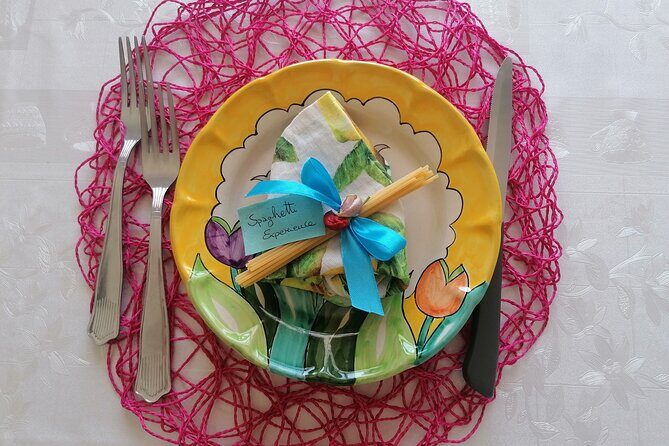
A key part of the day is a garden tour, which connects the cooking to the ingredients. You’ll see how the host family grows or sources items used in the meal. Reviews also mention fresh fruit and veggies picked straight from the garden, plus homemade touches like olive oil and limoncello in some cases.
This is valuable because it changes how you think about cooking after the class. Instead of treating the recipe like a list of substitutes, you learn what matters: fresh ingredients, simple pairings, and timing. Even if you can’t recreate the same garden at home, you can recreate the idea—choose ingredients that taste like something, not like “food flavoring.”
You’ll also notice the terrace and outdoor dining atmosphere. The view angle is part of the memory here, and the food tastes better when you’re not stuck inside a windowless room.
Cooking pasta in a real family kitchen: spaghetti + sauce skills

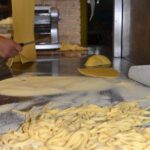
The core focus is making spaghetti (and learning broader pasta technique) by hand. You’ll learn how to prepare the pasta itself, then work through three different pasta/spaghetti ideas with different sauces.
Based on the experience description, the sauce lineup includes:
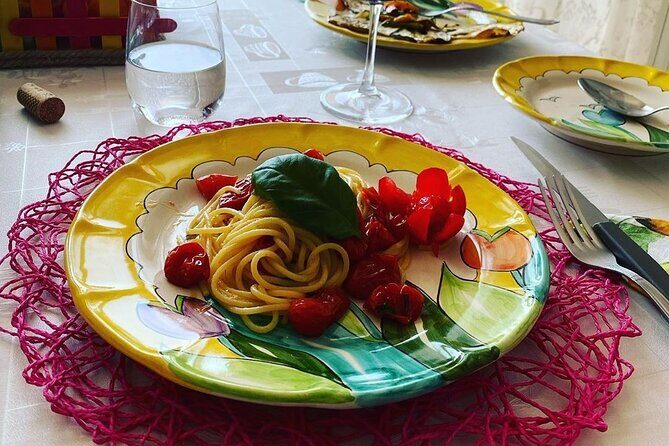
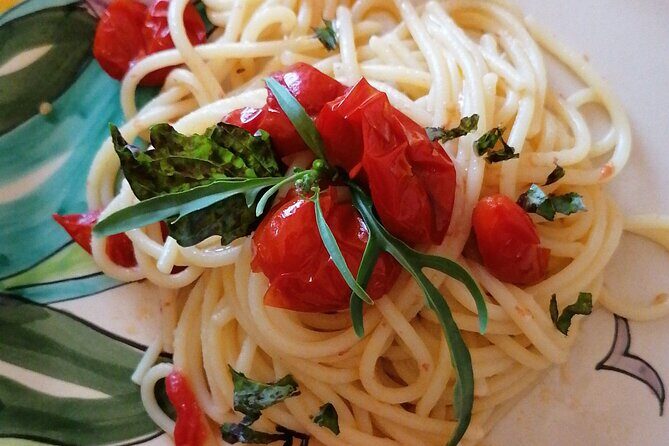
- Cherry tomato spaghetti
- Lemon spaghetti (described as lemon pesto in the sample menu)
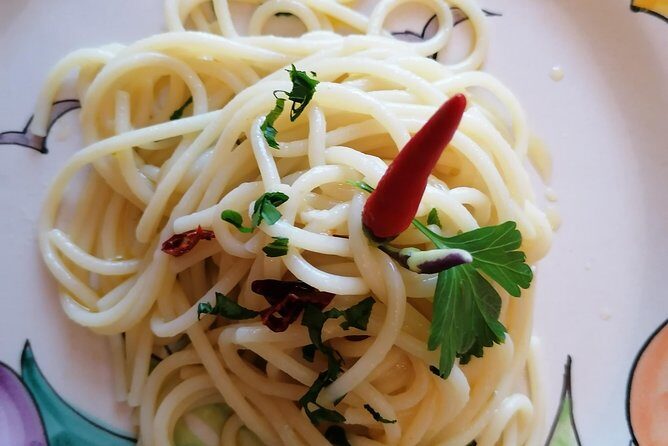
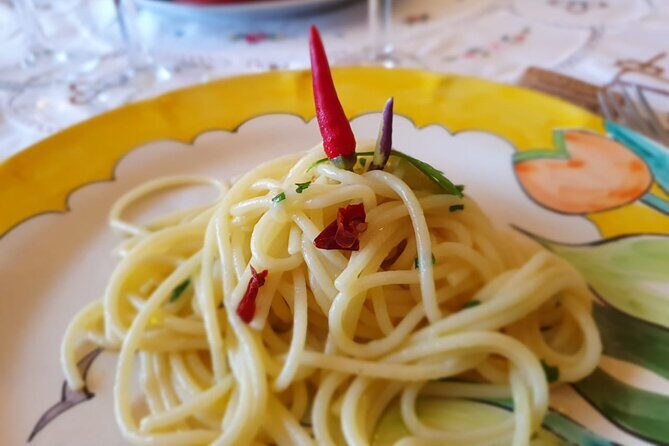
- A local chili spaghetti option
That range is what makes the class useful. You’re not just learning one sauce; you’re learning how to think in combinations—bright, herbal, and a little spicy—using ingredients that fit Positano’s coastal palate.
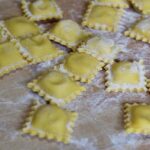
You’ll also cover more than plain spaghetti. The menu includes meatballs, and there’s mention of a special surprise dish. Some reviews go even further, describing additional pasta elements like ravioli (and extra dishes such as gnocchi or zucchini flowers). The consistent takeaway is that the kitchen is cooking a full meal, not only one plated example.
One more practical detail: you get a turn. Reviews say everyone can participate, and even without cooking experience, you can follow along because the teaching is step-by-step. That’s a big plus in a class where the main goal is confidence, not speed.




What to watch for while you cook
- Taste as you go. The class structure includes eating what you make, so don’t be shy about adjusting seasoning with the host’s guidance.
- Stay present during the dough work. If you’re distracted, the hand-on steps blur together fast.
- Ask about sauce balance. The cherry tomato and lemon versions are easy to overdo; the best lessons here tend to be about timing and proportion.
Tiramisu time: dessert you can repeat at home
The class ends with tiramisù instruction and then dessert. Tiramisu is often taught in an overly technical way in cooking schools. Here, the emphasis is on doing it in a home setting with family know-how and clear pacing.
Reviews call out that tiramisù is a standout—people describing it as some of the best they’ve had. The point isn’t just dessert satisfaction. It’s also a confidence-builder: if you can nail tiramisù from a family-style lesson, you’ll feel capable cooking Italian desserts back home.
If you like your lessons to include a “wow finish,” this is that.
The family-style meal: when you finally get to eat
After you cook, you sit down and eat together. The structure includes:
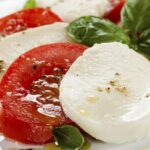
- Starter: local appetizer with tomatoes and fresh mozzarella, plus grilled veggies, ricotta cheese, and bruschetta
- Main: spaghetti with cherry tomatoes or lemon sauce
- Main: meatball
- Main: a special surprise
- Dessert: tiramisù
Some reviews also mention wine being served throughout, and even homemade limoncello. Food portions are described as generous, with people saying they skipped dinner afterward. That’s not automatic in paid classes—so it’s worth highlighting because it affects the value of the ticket.
You’re not being rushed through a tasting like a museum snack. You’re given a meal that makes sense after the cooking work. This is where the experience earns its reputation as a highlight: the act of learning blends into the act of sharing.
Price and value in Positano: paying for ingredients, teaching, and time
The price is $181.41 per person for about 3 hours. On paper, it can look “high” compared to a basic pasta workshop. Here’s why it feels different:
- You’re paying for a home setting. That costs real money in time, space, and preparation.
- You’re not just watching. You cook pasta and tiramisù with guidance, in a group capped at 10.
- You get multiple courses. The class includes an appetizer, pasta, meatball (plus a surprise), and dessert.
- Drinks are part of the experience (Prosecco aperitivo, and wine is mentioned in reviews).
Also, the date booking window is typically ahead (on average, about 71 days). That usually signals demand for a specific kind of experience: the kind people plan for because they don’t want to gamble on finding something equally personal at short notice.
If you’re trying to get the best value in Positano, the trick is avoiding the “just eat pasta” trap. This gives you food plus a skill plus a story, all in the same evening.
Who this class suits best (and who might not love it)
This is a great fit if you:
- Want authentic, family-style cooking rather than a scripted restaurant class
- Enjoy hands-on learning (you’re making pasta and dessert, not just tasting)
- Prefer small groups and conversation with the host family
- Like the idea of pairing cooking with ingredients you can trace back to a garden
It might be less ideal if:
- Stairs are a deal-breaker for you. The venue involves steps to reach the villa and garden.
- You’re looking for a quick, low-effort activity. This is a real class with cooking and a full meal rhythm.
- You want a “major sightseeing” plan. This is about food and time together, not a tour of big landmarks.
So, should you book it?
Yes, if you want one of the most memorable ways to spend a few hours in Positano, this is the kind of plan that earns its spot. The combination of Prosecco aperitivo, hands-on pasta and tiramisù, garden time, and a family-style meal is exactly how you get beyond postcard Positano.
Book it when you:
- can handle stairs,
- want a small-group evening,
- and care about learning the real method behind classic dishes.
If that matches you, this is a strong choice.
FAQ
How long is the Positano Spaghetti experience?
It runs for about 3 hours.
Where does the experience start and end?
It starts at Piazza Cappella, 84017 Positano SA, Italy, and ends back at the same meeting point.
What language is the class offered in?
English is offered.
Is there a limit on group size?
Yes. The experience has a maximum of 10 travelers.
What dishes will I make during the class?
You’ll learn to make spaghetti (with different sauces) and tiramisù. The experience description also highlights three different pasta preparations plus tiramisù.
What food and drinks are included?
You start with a Prosecco aperitivo and snacks like cheese and fresh salami. The meal includes a starter with tomatoes and fresh mozzarella, grilled veggies, ricotta, bruschetta, plus spaghetti courses, meatball, a special surprise, and tiramisù.
Is the class held in a home?
Yes. It takes place in the host family’s home, including time for a garden tour.
Do I need cooking experience to join?
No special cooking experience is required, because the host teaches you along the way.
Is it hard to get to the venue?
There are steps to reach the villa and garden.
What is the cancellation policy?
Free cancellation is available up to 24 hours in advance for a full refund.